
Whitman Hill Estate Vineyard
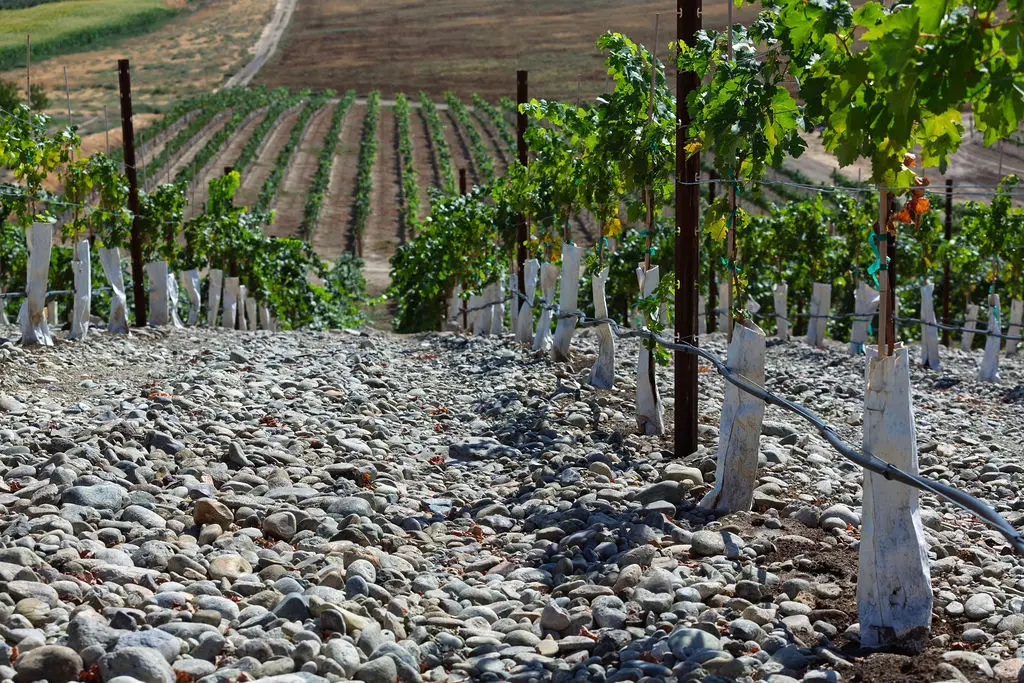
Whitman Hill Vineyard sits at 1,200 feet on the south- and east-facing slopes above the Yakima Valley, where steady air movement, balanced sun exposure, and a natural cold-air drain create ideal conditions for even ripening and vineyard health. Beneath the surface, layers of sandy loam and fragments of caliche—a pale, porous rock unique to this area—encourage deep root systems and reflect light onto the fruit, contributing to the site’s distinctive mineral character.

Whitman Hill Estate Vineyard is certified through the Sustainable WA and Salmon Safe programs. For us, these certifications are more than a seal. They reflect how we choose to farm every day, with care for soil health, responsible water use, and the surrounding ecosystem that supports our vineyard. It is a commitment that helps us protect the land we steward and keep the character of this place at the center of every wine.
Farming with Purpose
We have the privilege of farming our estate vineyard entirely for Whitman Hill wines. Every decision—from irrigation to crop load and harvest timing—is made in-house, guided by the same hand that crafts the wines. Varieties and clones are planted block by block to match slope, aspect, and soil, with each block picked and fermented separately to preserve the vineyard’s individual nuances.

Yakima Valley AVA
Stretching along the eastern slopes of the Cascade Mountains, Yakima Valley is Washington’s oldest and most diverse winegrowing region. High-elevation sites and the valley’s proximity to the Cascades create a wide diurnal range, with warm, sunny days balanced by cool nights that preserve acidity and structure.
The region’s complex soils, shaped by ancient riverbeds and volcanic activity, include the Ellensburg Formation and deposits of caliche—porous, mineral-rich layers that promote deep root growth and excellent drainage. Together, these conditions yield wines with balance, purity, and a distinct sense of place.